Kinda Hibrawi
Artist
SYRIA TWITTER PORTRAIT SERIES | 2013
Capturing the darkest periods in the decade long Syrian conflict. Each painting's background is compiled and collected from real tweets with detailed dates and time stamps of Syrian massacres that took place from 2013-2015. The collection is dedicated to the memory of the thousands of Syrian lives lost and especially to the most innocent of victims: the children. These are all children I met on the Syrian-Turkish border who fled Syria to find refuge in nearby Turkey with their families.


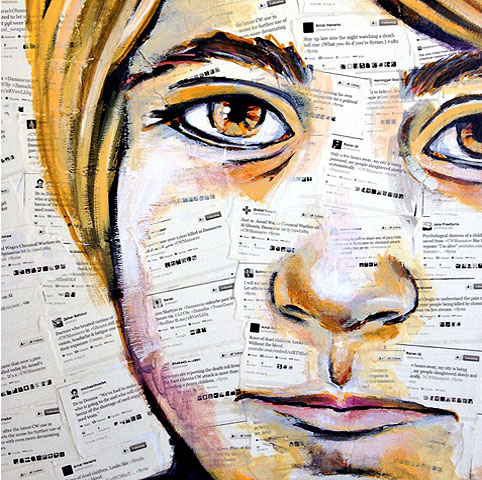


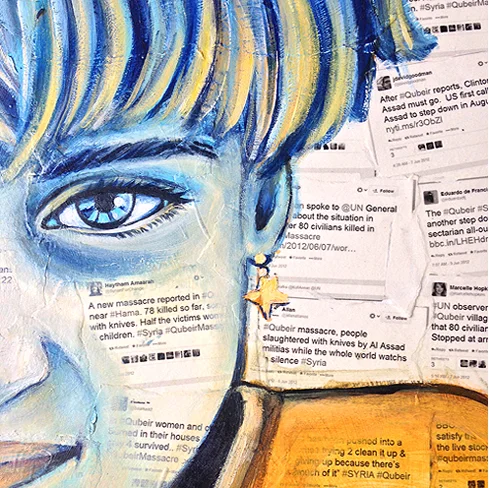
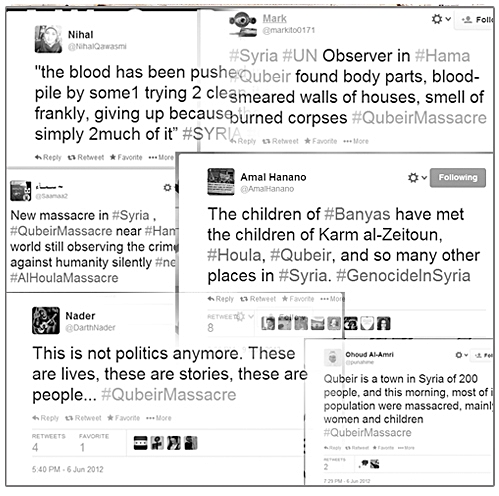


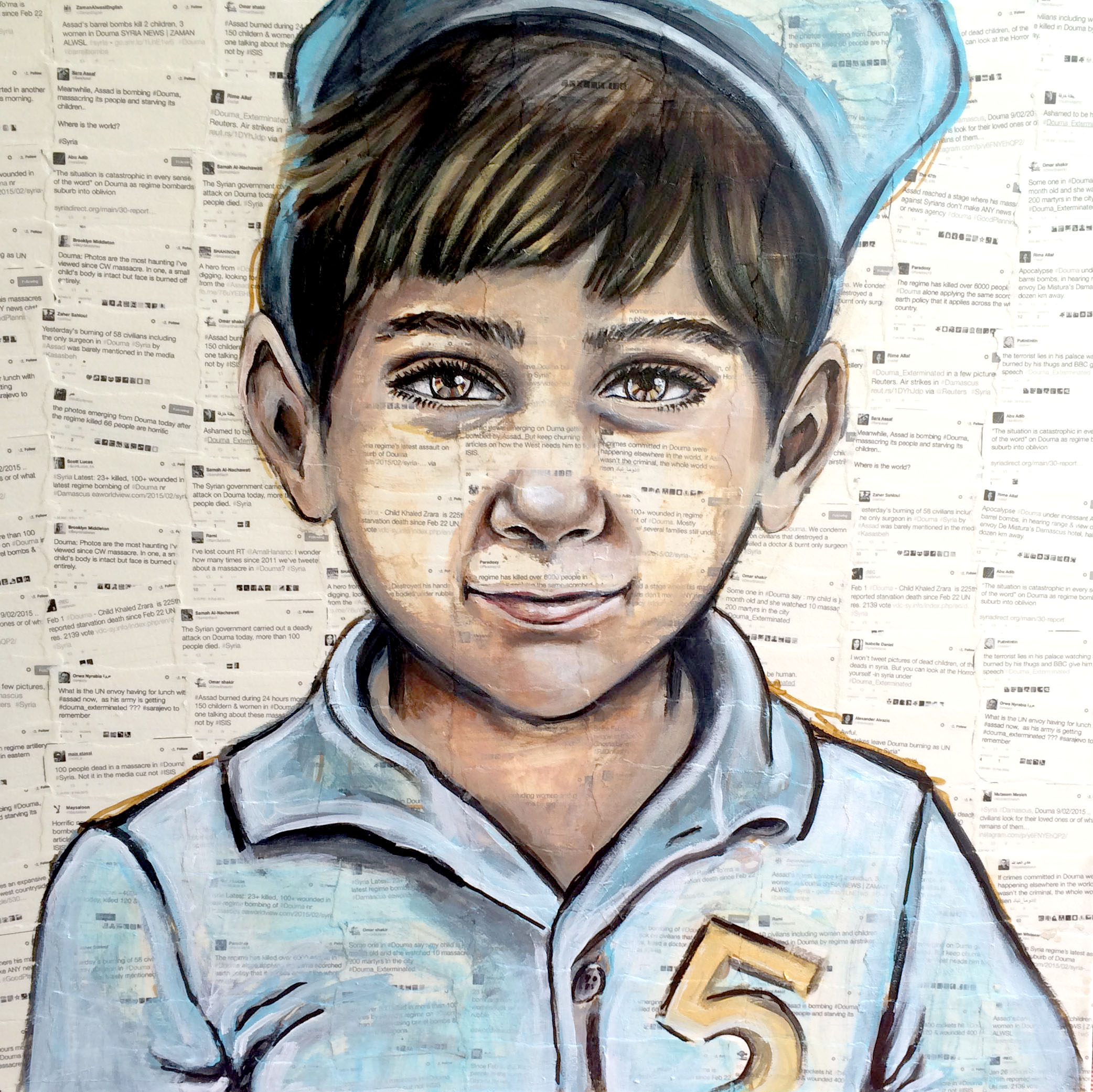


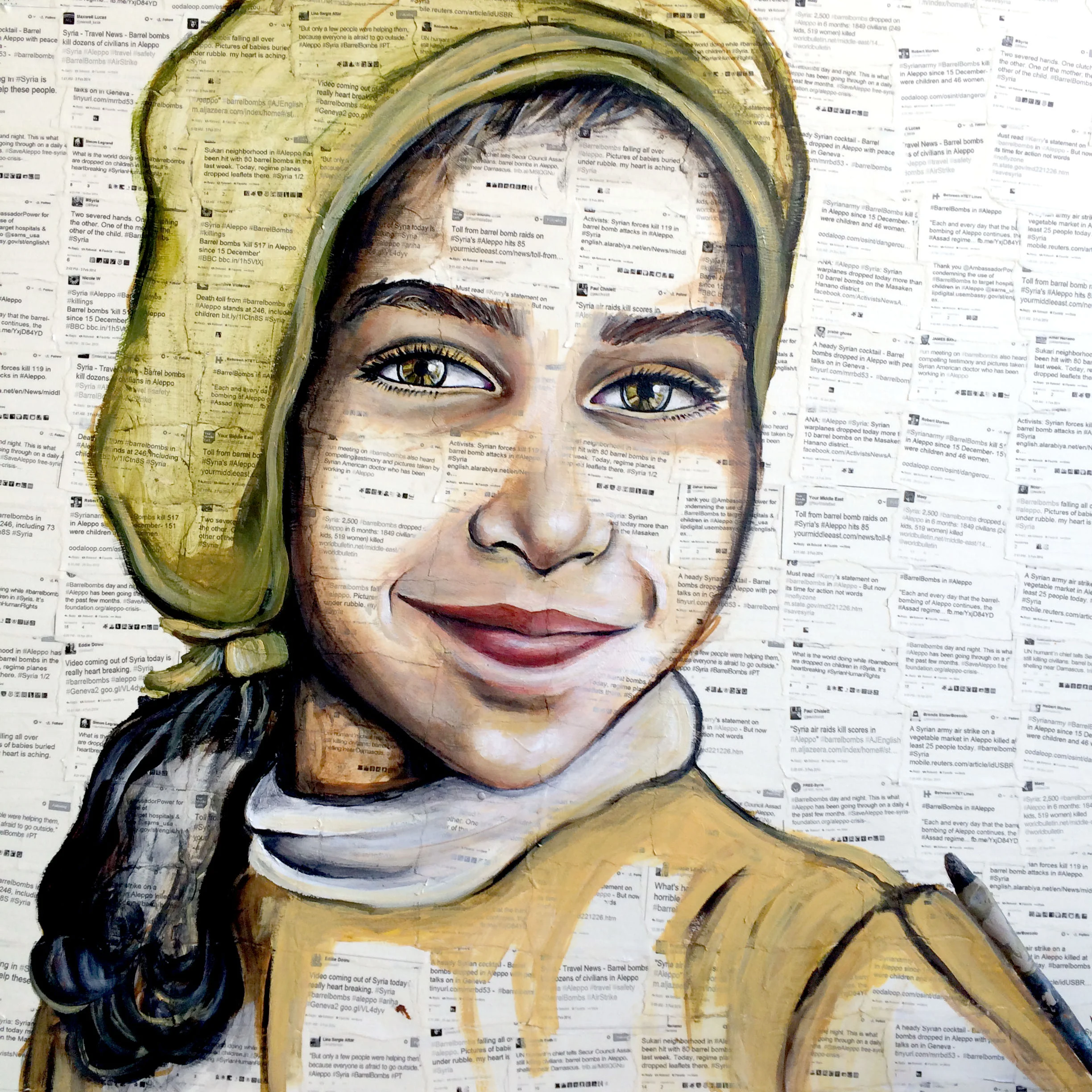


The portraits are of Syrian refugee children whose photos were taken by Mohamad Ojjeh, from our trips to the Syrian-Turkish border with the Karam Foundation from 2013-2016. #NeverForget
On the night of August 21, 2013 I was in New York City. I had just returned from a humanitarian mission in Atmeh, Syria's largest internally displaced refugee camp, and a few hours away from my hometown, Aleppo. I will be forever changed after witnessing almost 30,000 Syrians living in tents and dust. The conditions were horrible. A Syrian woman told me, "Death is better than living here." I am haunted by that women and so many others we spent time with among the olive trees in Syria. August 21, 2013 will also forever haunt me. It was past midnight and I couldn't sleep. So I turned to twitter for the latest news on Syria. Tweets started to come in from activists and locals on the ground in Ghouta, a small suburban district on the outskirts of Damascus, claiming that missiles with chemical weapons had been dropped throughout the night. They reported that the air was thick with toxic fumes. Quickly, the tweets become more desperate and the images more horrific, as we all helplessly watched the body count rise live via social media. The final count from the Ghouta chemical weapons massacre was over 1400 Syrian lives in one night.
Hibrawi attends a gala in Washington DC for the US State Department on Syria, featuring her Syria Twitter Portrait Series - 2015